Helping Kids Handle Failure: Lessons from the Dojo
"Failure is simply the opportunity to begin again, this time more intelligently". - Henry Ford
The power of perseverance and the growth mindset
Failure is one of the most difficult experiences for a child to navigate. Whether it’s missing a goal in soccer, forgetting lines in a school play, or not understanding a math assignment, setbacks can feel overwhelming. Many kids react with frustration, tears, or the desire to quit altogether.
But in martial arts, failure isn’t something to fear, it’s something to learn from.
Inside the dojo, kids discover that growth doesn’t come from perfection. It comes from persistence, courage, and the willingness to keep trying even when things get tough. Martial arts builds resilience in a way that few activities can, teaching children to view challenges as opportunities to improve rather than signs of weakness.
Let’s explore how martial arts training helps kids handle failure and develop a powerful growth mindset that carries into school, home, and everyday life.
1. Failure Is Normalized and Even Expected
In martial arts, students practice new skills over and over. They miss targets. They fall out of stances. They forget technique sequences. And that’s okay.
Failure is built into the learning process. Kids learn early on that they won’t master every move on the first try or even the tenth. Instead of feeling embarrassed, they begin to understand that mistakes are simply part of the journey.
This repeated exposure helps kids:
Reduce fear of failure
Build emotional tolerance for frustration
Learn patience with themselves
See effort as more important than instant success
When failure becomes normal, kids no longer freeze when things get hard, they keep going.
2. Belt Testing Teaches Perseverance and Preparation
One of the most powerful parts of martial arts is the belt system. Unlike sports where success depends on winning or outperforming others, martial arts belt promotions depend on progress, effort, and commitment.
Sometimes kids pass their belt test on the first try.
Sometimes they don’t.
And when they don’t, the dojo becomes a place of support instead of disappointment. Instructors help the child understand what they need to improve, practice with them, and guide them toward success next time.
This experience teaches children:
Not every setback is final
Hard work leads to progress
Disappointment can become motivation
Success feels even better when you earn it
A child who keeps training after not passing a test shows more strength than someone who succeeds easily.
3. Growth Mindset Is Built Into Every Class
Martial arts naturally reinforces the principles of a growth mindset:
Skills improve with practice
Progress takes time
Effort leads to improvement
Challenges make you stronger
Instructors consistently use language that encourages growth rather than perfection. Instead of saying, “You’re so good at this,” they say things like:
“Great effort!”
“You’re improving because you’re practicing.”
“Try it again, you’re getting closer.”
These messages help kids develop an internal belief that they are capable of growth, no matter how difficult something feels at first.

4. Kids Learn to Manage Big Emotions
Failure often brings frustration, anger, or self-doubt. Martial arts teaches kids not only how to manage these emotions, but also that it’s okay to feel them.
Through structured training, children learn how to:
Take deep breaths to calm down
Reset their mindset
Focus despite frustration
Approach challenges one step at a time
Many dojos incorporate mindfulness, meditation, and breathing drills that help children regulate their emotions more effectively, essential skills for handling disappointment in school, friendships, and life.
5. Encouragement Comes From a Whole Community
Martial arts training isn’t just instructor-led, it’s community-supported.
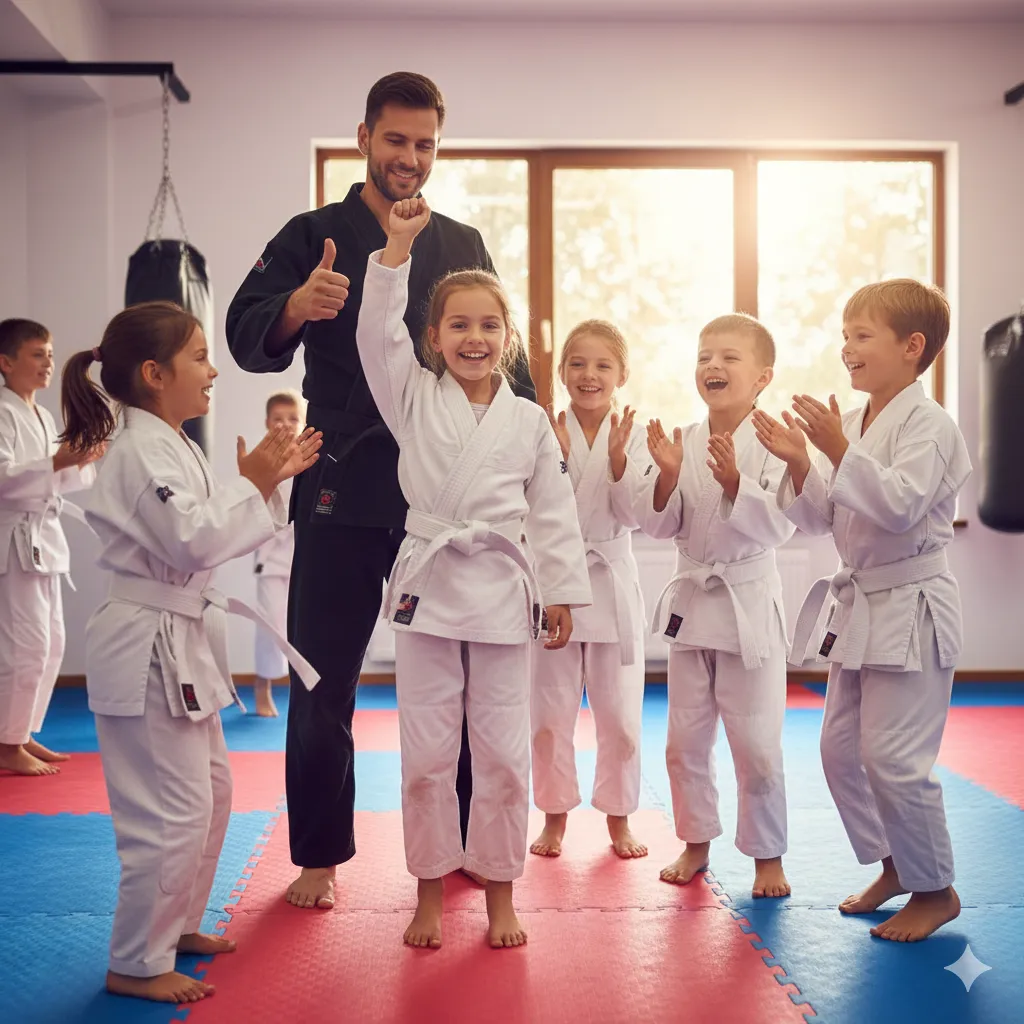
Students cheer each other on, celebrate improvements, and share their journeys.
When a child struggles with a technique or test, the environment is one of encouragement, not embarrassment. Seeing peers overcome their own challenges helps shy or discouraged kids understand:
They’re not alone
Everyone struggles sometimes
Everyone improves with effort
Success is worth working for
This sense of belonging strengthens resilience and builds social confidence.
6. Kids Learn That Quitting Doesn’t Stop the Challenge, But Continuing Solves It
One of the most meaningful lessons martial arts teaches is this:
Avoiding challenges doesn’t make them go away. Facing them does.
Children begin to understand that quitting may feel easier in the moment, but it robs them of the growth and pride that come with perseverance.
Over time, martial arts helps kids redefine failure:
It’s not losing.
It’s not falling short.
It’s refusing to give up.
That shift in mindset transforms how they approach schoolwork, friendships, hobbies, and future goals.
7. Success Feels More Meaningful When You’ve Earned It
In an era of participation trophies, martial arts stands out. Promotions, stripes, and recognition must be earned, but they are achievable with effort.
When a child finally executes a kick they’ve struggled with, remembers a form, or earns a new rank after working through setbacks, their confidence skyrockets.
It’s not empty praise.
It’s earned confidence, the kind that lasts.
Final Thoughts
Failure is one of life’s greatest teachers, if children learn how to use it. Martial arts gives kids a powerful, supportive environment to experience challenges, practice perseverance, and develop emotional resilience.
From mastering techniques to overcoming disappointment, every moment on the mat strengthens their ability to navigate real-world challenges with courage and confidence.
In the dojo, kids don’t just learn how to punch and kick, they learn how to rise, try again, and grow from every setback.
That’s a lesson that lasts a lifetime.

